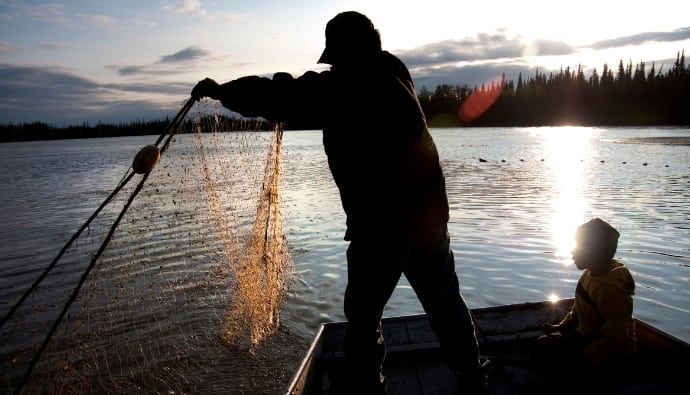

Fishing with a net can be highly effective, but it requires proper technique and practice. To begin, untangle the cast net to ensure it opens fully when thrown into the water. Next, load the rope and hold the net away from it to load the weights. Once all weights are in place, cast the net towards your target, controlling its motion using the weights and releasing it with an upward motion.
Mastering the use of a net in boat or kayak fishing can lead to an abundance of catches without much hassle. Keep in mind that perfecting the casting technique may take some time, so practice regularly. In this article, we provide a comprehensive step-by-step guide and tips for successfully fishing with a net.

How to Use a Fishing Net
Most anglers use a cast net for fishing different fish species like blue tilapia and sea trout. Before knowing how to use a fishing net, it’s essential to identify its different parts. These parts include:
- A rope with a loop at the end
- The horn: A circular piece
- Braille lines
- Lead line
So, how do you use a fishing net? Follow the steps below.
Step 1: Untangle the Net
A tangled fishing net won’t open properly, so it’s advisable first to clear it. To do this:
- Lift your net vertically and remove all the tangles.
- Work in sections to ensure you’ve untangled it properly.
- When clearing it, ensure the lead line isn’t flipped over the net’s braille lines.
Step 2: Load the Rope
Place the looped side of your line on your non-dominant hand and coil the headline on your hand, creating large loops. Next, make one large coil by twisting the net in your hand. When loading the rope, ensure the lead line rests on the ground.
Remember, the number of coils you make depends on the size of your fishing net.
Step 3: Load the Weights
To load the weight, pick the lead line, place it on your backhand thumb, and ensure it falls straight down. Next, place two strands of your lead line over your backhand shoulder.
Gather the net where the weights descend using your free hand and pinch the lead line using your thumb and pointer finger.
Step 4: Cast the Net
Pick the net with both hands and turn sideways. Ensure your dominant hand faces the area you target to throw the cast net. Next, swig your net away from the targeted spot and use both your hands to swig the net toward the targeted area.
Release the net while using the weights to create momentum. You know you have done it correctly when your cast net opens into a circle.
You can start by throwing the net on a dry surface, and once you perfect the art, you can practice throwing it into the water.

Tips for Choosing the Right Size and Type of Net
There are numerous fishing nets in the market today. Some of the most popular types include:
- Cast Nets: These nets are designed for shallow-water fishing. Cast nets are ideal for recreational anglers because they are labor-intensive for commercial fishing. These hands-thrown nets are ideal for catching aggressive fish species like northern pike.
- Gillnets: These nets are hung vertically along the water column. They have mesh sizes holes that trap the fish gills, and they get entangled more as they try to escape.
- Landing Nets: These are popularly used for scooping fish that have already been hooked. They are commonly used by fly fishing anglers, especially those targeting large fish like carp.
- Seine Nets: These long nets are used for commercial fishing. They usually have a bag at the center and are set from a boat or at the shore. They are set in a place and trap all the fish in the targeted area.
Fishing nets come in different sizes and weights, and the one you choose depends on your personal needs. Here are some of the factors to consider.
- The Mesh Size: The size you choose depends on the size of your bait and the fish species you’re targeting. The larger the bait, the larger the mesh you choose, and vice versa.
- Weight: Heavier nets sink faster but are challenging.
Techniques for Successful Fishing with a Cast Net
How you set your fishing gear determines whether you will have a successful or bad day. Here are some tips and techniques to increase your chances of catching more fish.
1. Use a Large Enough Cast Net
The moment you go fishing, you are not sure the size of fish you will get. There’s nothing worse than losing a fish simply because it can’t fit into your small cast net. Ensure your cast net is large enough to accommodate bigger fish species.
2. Stay Out of the Way
If you plan to go boat fishing using a net, be accompanied by a partner to help you throw the net as you hold the rod and the reel.
Make sure there is ample room for your partner to fight the catch. Staying too close to the person holding the net can make them lose focus and fail to secure the fish.
3. Don’t Stab Your Catch
Some anglers tend to lunge the net forward while directly facing the fish, which can injure them. Doing this can also knock the hook out of the fish’s mouth, and you might lose it.
Instead, when using a net, ensure you use a scooping motion. You can achieve this by placing the net below the fish and then lifting the net toward the surface.
4. Don’t Rush Your Cast Net
Although you might be tempted to rush the landing, using the reel and rod first is advisable until you feel it’s time to catch it.
Rushing the fish can scare it and make it run toward the deep waters. This can trigger a severe landing process that can cause additional stress to your targeted fish.
5. Fish in Calm Waters
When fishing in a river or water with a current, work with the current instead of moving against it. For example, move the fish upstream to downstream and ensure the fishing line is as tight as the rod.
Working against the current can put a lot of pressure on the hook, which can end up pulling it out of your catch’s mouth.
6. Net at the Surface
You should only place the net once the fish break the water’s surface. This gives you plenty of room to place your net underneath to scoop the fish easily.
Conclusion
You might be surprised by how much fish you get if you use a fishing net correctly. When using the net, ensure you start by clearing the cast net, then load the rope and weights, then throw the fishing net.
Always remember fishing nets come in different sizes and weights, and you should always consider the mesh size, weight, and overall size of your net.
Lastly, follow the tips and techniques recommended above to increase your chances of catching fish.
 Fishing Expert

 Facebook
 YouTube