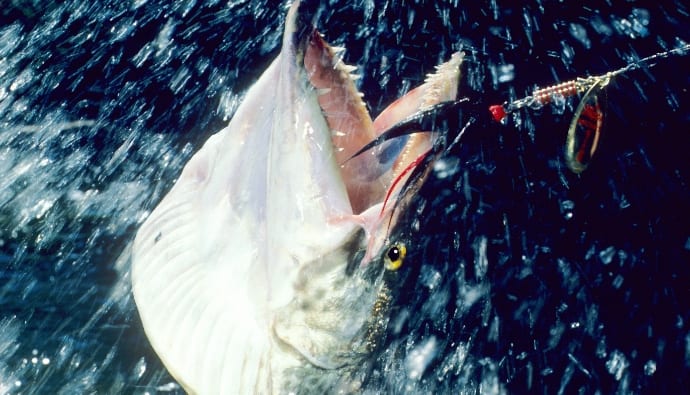

What is a snook fish and how can you catch it?
We’ll cover why snook fishing is so popular in Texas and other parts of the US. This wily game fish can be found in both fresh and saltwater and tricky as heck to catch.

Also known as robalo fish, snook can be found in both the Atlantic and Pacific sides of North and South America living in mangroves, docks, and bridges.
Let’s go fishing!
Recommended Snook Fishing Gear:
- Snook Fishing Rod: St Croix Mojo Inshore Spinning Rod
- Snook Fishing Reel: Daiwa BG
Listen to more fishing tips on the Cast & Spear Podcast
Overview
Snook has a prominent black lateral line that runs along the body, a lower protruding jaw, and a sloping forehead. Snook fish don’t have teeth but their sharp gill plates can injure you if you are not careful.
The fish is an opportunistic predator and as it increases in size it targets larger prey. Some can even turn on juveniles during the winter when food is scarce.
Considered to be an excellent food fish. Snook is fished commercially and is considered to be a prized fight fish because of its tendency to fight back.
Snook Facts
| Scientific Name | Centropomus undecimalis |
| Common Name(s) | Snook, Common Snook |
| Family | Centropomidae |
| Identifying Characteristics | Snook can be found in both the Atlantic and Pacific sides of North and South America living in mangroves, docks and bridges |
| Depth Range | 20 m |
| Habitat | 12 inches in CA |
| Limits | Check your local regulations |
| Largest Recorded | 57 pound 12 ounces |
| Status | Protected in the Gulf of Mexico |
Snook Habitat
If you are snook fishing, look for the fish around submerged trees and other debris. You will find cruising summer snook along shorelines, but they can also be found along jetties and piers.
In inshore waters, look for snook in:
- mangrove shorelines
- grass flats
- oyster bars
- creeks
- large rivers
- ditches
- canals
- bays
How to Catch Snook

Use a light saltwater spinning or baitcasting setup, but make sure that the braid can withstand 30 lbs. The fluorocarbon leader you use should be able to pass a 15 lb for the smaller snook to a 40 lb test if you are fishing for a giant snook.
The best snook lures are bucktail jigs that come attached with plastic tails. You can also use soft plastic lures like DOA Shrimp and Jerk Shads as well as several types of topwater plugs. The plugs will come in handy if you are fishing in low light such as early morning or twilight.
Florida Snook Fishing Tactics
- The most productive areas for snook fishing in Florida are hard bottom ones that lie close to the shore. These places usually have enough nooks and crannies for the fish to hide in.
- When you are fishing over hard bottom, make long casts beyond long weedy areas and then retrieve the fly to attract snook.
Snook Fishing Tips
- The best snook baits include live shrimp, mullet, pilchards, and sardines.
- Use live bait near ambush points such as docks and mangroves to entice the fish to bite.
Spearfishing Snook Fish

- Spearing snook isn’t complicated since they aren’t easy to spook before your shot. They aren’t the most exciting fish to go after, but if you want to try, make sure you check your State’s snook regulations. Most likely, you’ll only be able to do it out of the States.
- Snook is prohibited for harvest by spearing in Florida and Texas.
Snook Seasons
In Florida, snook season starts in March and closes in April, and then opens again in September and closes in November. If you have a fishing license and a snook stamp (snook permit) you can keep more than one fish a day as long as it is between 28 and 32 inches.
Otherwise, you can only keep one per day. Plus, you can only use a hook and line setup for snook fishing.
How to Clean Snook
- Lay the snook flat on a chopping board and use a knife to scrape off the scales at the throat.
- Force the tip of the knife at the top of the spine near the head and work your way down the back. Make several quick cuts to free the meat.
- Stick the knife 3 quarters from the back of the incision and pierce the fish till the knife comes out the other end near the tail.
- Work the knife all the way to the back of the fish and then use the knife to cut the whole fillet off over the ribs.
- Repeat on the other side for the second fillet.
How to Cook Snook Fish
Snook Recipe
- Heat some olive oil at low heat in a frying pan.
- Place 1 finely diced onion to the hot oil and sauté till it turns soft and translucent.
- Add ginger and continue stirring for a few minutes.
- Add a can of crushed tomatoes and salt and bring to a light simmer.
- Reduce the heat, cover the pan and cook for 10 minutes
- Add the fillets along with a black cover to the pan and re-cover. Cook till the fish is done.
- Serve with cilantro and the juices from the pan.
FAQs
Q: Are snook good to eat?
A: While cooking snook, remove the skin or it will have a soapy taste. The meat is heavier than a trout’s but lighter than swordfish. It is delicious when cooked.
Q: Is Snook illegal to catch?
A: There are strict regulations for the recreational fishing of this fish in Florida. You have to have a snook permit as well as a saltwater fishing license to be allowed to catch it. It is illegal for anyone to kill, harvest or sell snook.
Q: Where are snook located?
A: Snook can be found in both the Atlantic and Pacific sides of North and South America, living around submerged mangroves, docks, and bridges
Q: Is snook a saltwater or freshwater fish?
A: Both. Snook often travel upriver into freshwater sources and when they are in saltwater they are never far from freshwater and vice versa.
Insider Advice
Before heading out on a snook fishing trip to Florida, make sure that you have all the required permits that are mentioned in this guide. You can only catch one per day if you don’t have either of these so be prepared.
If you have tips and strategies that worked for you in catching this fish please do share in the comments.
 Founder & Angler


 Facebook
 YouTube