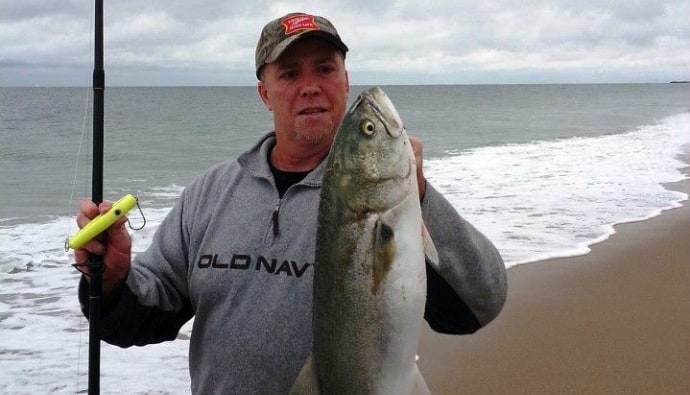
The Carolina Rig keeps your bait on the bottom and lets it move. The egg sinker slides on the main line and sits on the sand. Your leader and hook float above, giving the bait a natural drift. Surf species — stripers, redfish, pompano, corbina — eat off the bottom. This rig puts your bait where they feed.
Why Use a Carolina Rig for Surf Fishing ?
The Carolina Rig offers several key advantages in the surf:
- Natural Bait Presentation: The separation between the weight and the bait (created by the leader) allows your bait to move freely and naturally in the current, mimicking real prey. This is crucial for attracting wary surf fish.
- Bottom Contact: It keeps your bait consistently on or near the sandy bottom where fish like flounder, pompano, redfish, and corbina feed.
- Excellent Casting Distance: Surf
fishing often requires long casts to reach beyond the breakers or into troughs. The Carolina Rig allows you to use a heavier weight for maximum casting distance without sacrificing a natural bait presentation. - Versatility: Works well with a wide variety of different baits, including live bait (like sand crabs or shrimp), cut bait, and even soft plastics.
- Detecting Bites: Allows for good bite detection.
What You’ll Need: Carolina Rig Components
Here’s what you need to build a Carolina Rig for surf
Main Line: Your main
Sliding Sinker:
- Pyramid Sinker: Highly recommended for surf
fishing . Its shape helps it dig into the sand and hold better in waves and current than other sinkers. - Egg Sinker: Can be used, but may roll more in the surf.
- Weight: 1 to 4 ounces is typical for surf
fishing , depending on the current, wave action, and desired casting distance. Use enough weight to hold the bottom but not so much that it feels unnatural.
Bead: (Optional but Recommended)
- Purpose: Protects the knot at the swivel from the sliding sinker. It also adds a clicking sound underwater that can attract curious fish.
- Type: Plastic or glass beads (glass makes more noise).
Swivel:
- Purpose: Connects the main line to the leader line and prevents line twist.
- Type: Barrel swivel or crane swivel. Choose a size appropriate for your line strength (e.g., size #5 to #1/0).
Leader Line:
- Material: Monofilament or fluorocarbon. Fluorocarbon is less visible underwater and more abrasion-resistant, making it a good choice, but monofilament works fine too.
- Length: 12 inches to 36 inches is a good range for surf
fishing . Experiment with leader length based on conditions and fish behavior. - Test: Typically 15-40 lb test, depending on your main line strength and the target species. Use a leader slightly lighter than your main line so if you get snagged, you only lose the leader and hook.
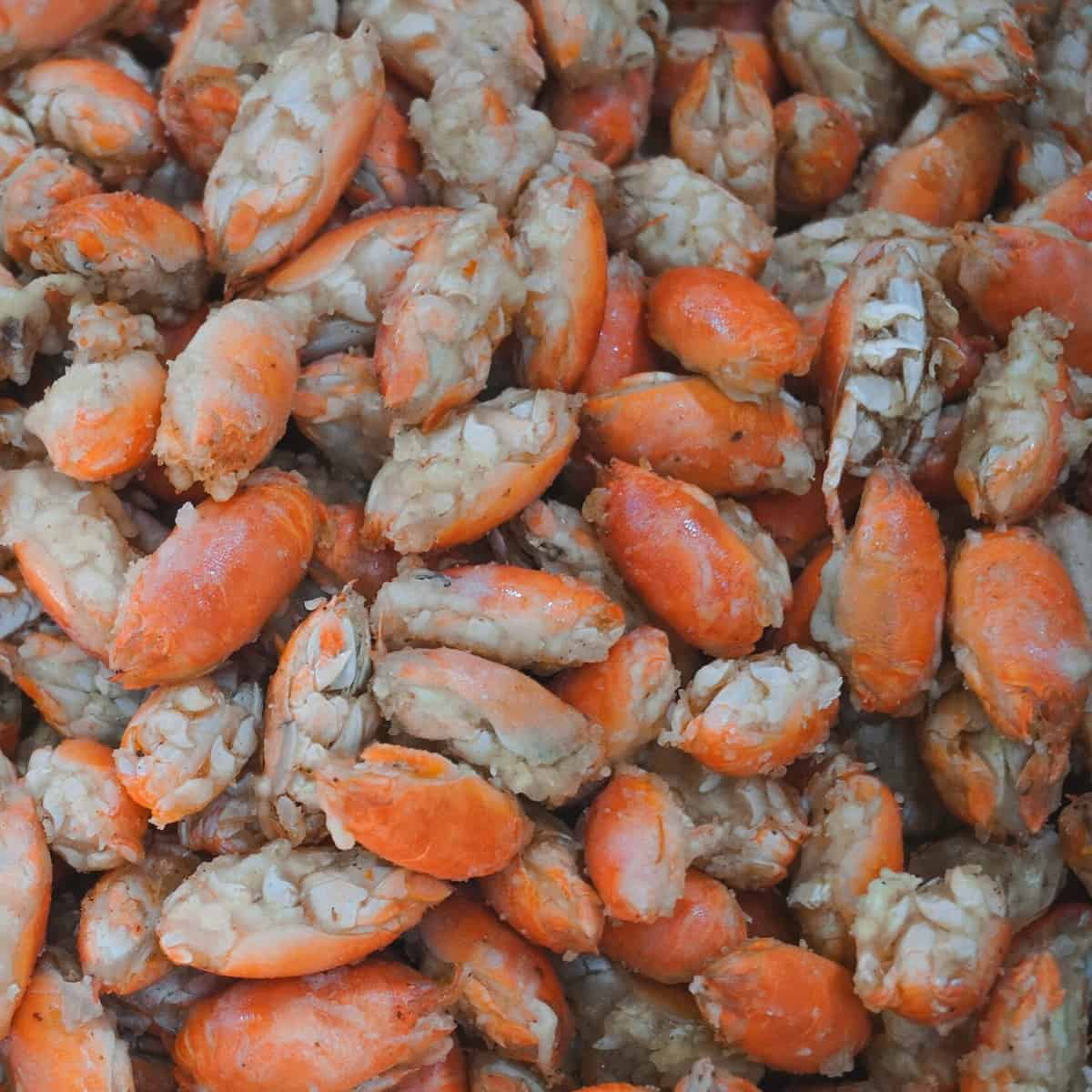
Bait: Shrimp, sand crabs (sand fleas), cut bait (mullet, squid), Fishbites, or soft plastics like Gulp! (especially shrimp or crab imitations).
Size: Depends on your bait size and target species. Sizes 1/0 to 5/0 are common for surf
Bait: Shrimp, sand crabs (sand fleas), cut bait (mullet, squid), Fishbites, or soft plastics like Gulp! (especially shrimp or crab imitations).
Hook Type:
- Circle Hooks: Highly recommended for surf
fishing , especially for catch-and-release. They typically hook fish in the corner of the mouth, reducing deep hooking. - J-Hooks: Can be used, but require a more active hookset.
- Kahle Hooks: Another good option for live bait.
How to Tie the Carolina Rig (Step-by-Step)
- Slide Sinker and Bead onto Main Line: Thread your main line through the sliding sinker (pyramid or egg). Then, slide a bead onto the main line below the sinker.
- Tie Main Line to Swivel: Tie your main line to one eye of the barrel swivel using a strong knot. Good choices include the Palomar Knot, Uni Knot, or Improved Clinch Knot.
- Attach Leader: Cut a piece of leader line (12-36 inches). Tie one end of the leader to the other eye of the swivel using the same strong knot.
- Tie Hook to Leader: Tie your chosen hook to the free end of the leader line. A Uni Knot or Improved Clinch Knot works well.
- Add Bait: Attach your chosen bait to the hook.
How to Fish the Carolina Rig in the Surf
- Cast Out: Cast the rig beyond the breaking waves, aiming for troughs (the deeper areas between sandbars), cuts in sandbars, or areas with structure like jetties or rock piles.
- Let it Settle: Allow the sinker to reach the bottom.
- Slow Retrieve: Reel in the slack line. Slowly drag the rig along the bottom by pulling your rod tip sideways in a smooth sweep, parallel to the water. Reel in the slack and repeat. Avoid aggressive jerking; let the bait drift naturally with the current and wave action. The goal is a natural presentation.
- Feel for Bites: Pay close attention to your line and rod tip. Bites in the surf can feel like:
- A sharp tap or series of taps.
- A sudden mushy weight or heaviness.
- Your line suddenly going slack as the fish picks up the bait and swims towards you.
- Set the Hook: When you feel a bite:
- Circle Hooks: Simply start reeling steadily and apply firm pressure. The hook will typically set itself in the corner of the fish’s mouth. Do not make a hard, jerking hookset.
- J-Hooks: Reel down quickly to remove slack and sweep the rod firmly upwards or sideways to set the hook.
Carolina Rig Tips for Surf Fishing
- Weight Selection: Use enough weight to hold the bottom in the current and waves, but not so much that it hinders the natural movement of the bait. Pyramid sinkers hold best in sand. Start with a 1-2 ounce sinker and adjust as needed.
- Leader Length: Experiment with leader length. Longer leaders (24-36 inches) allow for more natural bait movement in calmer water or when fish are spooky. Shorter leaders (12-18 inches) provide better control in strong currents or when
fishing near snags. - Bead or No Bead? The bead adds noise and protects the knot. Most surf anglers use a bead. Try both and see what works for you.
- Bait Choice: Match your bait to what the fish are naturally eating. Live sand crabs, fresh shrimp, and cut mullet are excellent choices for many surf species like pompano and redfish.
- Structure is Key: Cast near jetties, rock piles, sandbars, and troughs where fish congregate.
Advantages of the Carolina Rig
- Natural Presentation: The bait moves freely and naturally above the bottom.
- Good Casting Distance: The heavier weight allows for long casts.
- Effective for Bottom Feeders: Gets the bait down to where fish are feeding.
- Versatile: Works with various baits and soft plastic lures.
- Good Bite Detection: The sliding sinker allows you to feel bites more easily.
Disadvantages of the Carolina Rig
- Snag Potential: Can get snagged on rocks and heavy structure more easily than some other rigs.
- Potential for Tangles: The long leader can sometimes tangle during casting if not done smoothly.
- Less Direct Feel: The sliding weight means you don’t have as direct a feel for the bait compared to a rig where the weight is fixed closer to the hook (like a Texas Rig).
Alternatives for Surf Fishing
- Fish Finder Rig: Very similar to the Carolina Rig, but often uses a sliding clip for the sinker (allowing you to easily change weights) and typically uses a pyramid sinker. Many anglers consider these essentially the same type of rig for surf purposes.
- High-Low Rig: Presents two baits at different depths, good for targeting different species or finding where fish are holding.
- Dropper Loop Rig: Similar to a high-low rig, using loops tied directly in the main line or leader.
Frequently Asked Questions (FAQ)
Yes, it’s an excellent rig for surf
Varies from a subtle tick or mushiness to a sharp pull or your line going slack.
Live or cut bait (shrimp, sand crabs, mullet) and soft plastics all work well.
No, a Carolina Rig is designed to be fished on the bottom.
12 to 36 inches is a good range for surf
1 to 4 ounces is common for surf
Circle hooks are generally better for surf
Redfish, speckled trout, flounder, pompano, corbina, whiting, snapper, grouper, and many other bottom-feeding species.
It protects the knot from the sliding sinker and can add an attracting clicking sound.
Conclusion
The Carolina Rig is a fundamental setup that every surf angler should know how to tie and use. Its simplicity, versatility, and effectiveness in presenting bait naturally along the bottom make it a go-to choice for targeting a wide variety of surf species. Master this excellent rig, and you’ll be well on your way to more successful days
The Carolina rig is one of the most versatile bass