
Are you ready to catch the mayan cichlid?
Also known as the Mayan cichlid, false red terror, orange tiger, and atomic sunfish, this fish is widespread in Central America and is a favorite among anglers. Note this fish is often misspelled as mojara.
Now let’s learn a bit about this fish and how to catch it.
Recommended Fishing Gear:
- Mojarra Fishing Rod: UglyStik GX2 Ultralight Spinning Rod
- Mojarra Fishing Reel: Diawa BG size 1500
Overview
Mojarras can be found in both fresh and saltwater habitats over shallow coastal lagoons, mangrove swamps, freshwater marshes, and rivers.

It feeds on small fish and invertebrates and is known for brooding its young in its mouth to protect them from predators. The fish swims in schools and tends to remain in shallow water refuges in coastal areas to avoid large predators.
The name ‘mojarra’ is used in Latin American countries as a name for species of the cichlid family, such as the tilapia. The fish spawns at the bottom in both fresh and brackish water, and females can lay up to 600 eggs at a time.
Mayan Cichlid Fish Facts
| Scientific Name | Cichlasoma urophthalmum (Mayaheros urophthalmus) |
| Common Name(s) | Mojarra, Mexican mojarra, Mayan cichlid, orange tiger, castarrica, and schwanzfleckbuntbarsch |
| Family | Cichlidae |
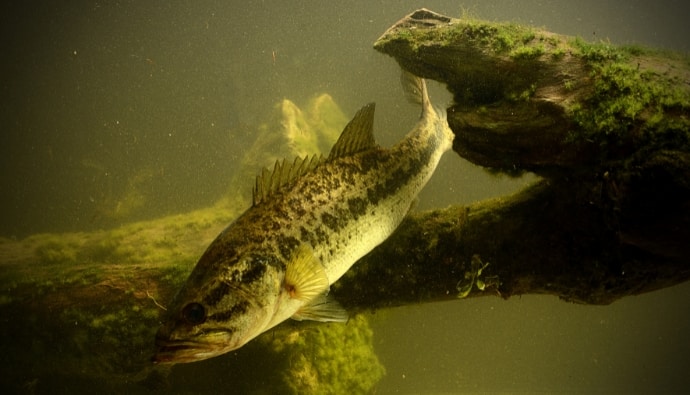
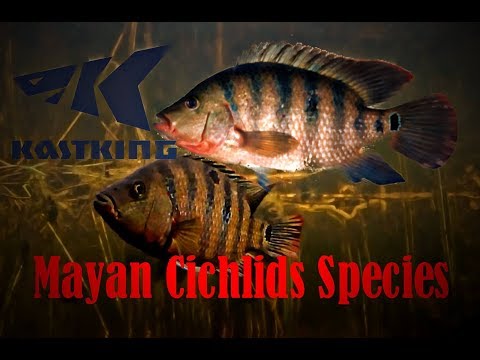
| Identifying Characteristics | The fish is oval in shape and has spiny fins, wide vertical stripes, and eyespots on its tail which confuse predators. It is usually olive-brown to beige in color. |
| Depth Range | 2m |
| Habitat | The fish is native to Central America, particularly to the slope waters of southeastern Mexico, Belize, Guatemala, Honduras, and Nicaragua. |
| Limits | Check your local regulations |
| Largest Recorded | N/A |
| Status | No |
Mexican Mojarra Habitat
The castarrica prefer the shallows and can be found in lentic habitats such as mangrove swamps and freshwater marshes. This species is adaptable and can also be found in a range of natural and artificial coastal/inland environments.
This includes ditches, ponds, canals, streams, limestone sinkholes, connected caves, and coastal lagoons.
How to Catch Mayan Cichlid
You can catch almost any mojarra species using a 2lb test line but go for a 4lb to 6lb one if you are fishing heavy cover, which will usually be the case. Even the largest one has a small mouth, so use a small hook, or it may get ripped off as the fish bites.
Orange tigers can be caught with bait but will not ignore lures either. But make sure that the weather is clear, or you will have a tough time getting them to bite. The good news is that the mojarra fish is curious by nature, so it will try out about anything you use to lure it in.
Use small crankbaits such as a floating Rapala as a lure, but small rubber jigs will also work.
Mayan Cichlid Fishing Tactics
- The best bait to use for this fish is freshwater shrimp, small minnows, and worms. You can also use white bread to create a chum slick.
- The ideal setup for catching mojarra fish is a Daiwa BG spinning reel in the 1500 size range and an extra light spinning rod.
Mexican Mojarra Fishing Tips
- If you are using crank baits, cast it out to a promising-looking cover and let it sit for a while before making it twitch to attract the fish.
- Suspend small rubber jigs in front of mojarras and twitch them to pique the fish’s interest and get it to take a bite.
Mexican Mojarra Seasons
Mexican mojarra spawns in the spring and early summer, but little is known of its breeding habits and fecundity. Yet, what is known is that the fish builds nests for its eggs and are quite protective of its young.
How to Clean Mojarra Fish
- Wash and place it on a cutting board. Remove the scales using a spoon or knife to scrape the fish from the tail to the head. Use moderate force and rotate the fish as you go so you don’t miss a single scale.
- Insert the tip of a sharp knife in the underbelly about an inch inside and as close to the tale as you can get.
- Cut open the belly by sliding the knife upward toward the tail.
- Cut open the fish completely by moving the knife along the cavity.
- Pull out the entrails and clean the cavity of residual viscera inside and out.
- This is the best method to clean the fish if you plan on frying it whole, which is usually the best way to cook this fish. Cook it using the following recipe to find out why:
How to Cook Mojarra Fish
Mojarra Fritas Recipe

If you’re craving a mouthwatering fried fish dish (pescado frito), here you go!
- Choose a pan that is large enough to cover the whole mojarra with oil.
- Heat 1 liter of vegetable oil in the pan over medium heat.
- Rinse and dry the fish and make shallow diagonal cuts on it.
- Season the pescado mojarra with salt and pepper and coat it with flour.
- Add 4 garlic cloves and a lemon peel to the hot oil.
- Put the fish in the oil when it gets hot and cook for 15 minutes or till the fish is cooked through.
- Remove the fried mojarra from the pan and remove excess fat by soaking up the oil with napkins or thick paper towels that won’t stick.
Frequently Asked Questions
Q: What do mojarra fish eat?
A: Mexican mojarra prey on smaller fish and aquatic invertebrates such as snails. They are also known to eat flies and mosquitos.
Q: Are mojarra and tilapia the same fish?
A: The name ‘mojarra’ actually describes a species of saltwater fish, but the term is used to describe several freshwater cichlids, such as tilapia. The tilapia looks quite like the Mexican mojarra and are about the same size, thus the confusion.
Q: What does the nest of a mojarra fish look like?
A: Nests are oblong, shallow depressions and can be found in the spongy root masses of mangroves.
Q: Why is the Mexican mojarra coveted by anglers?
A: The mojarra is targeted by anglers because of its beauty and also because of its palatable flesh. Its aggressive approach to bait also makes it a favorite among fishermen who love a challenge. The species is available for aquariums but only for those who have the proper facilities to house it.
Q: What is mojarra in english (mojarra en ingles)?
A: Mojarra is a two-banded sea bream that can be found in shallow fresh and saltwater environments.
Insider Advice
The Mexican mojarra fish is usually caught as bait for larger fish species but rather than buying them offshore. You can get them for free by using these fishing strategies.
If you have already tried your luck and succeeded in catching this fish, please share your experiences, tips, and strategies below.
 Founder & Angler


 Facebook
 YouTube