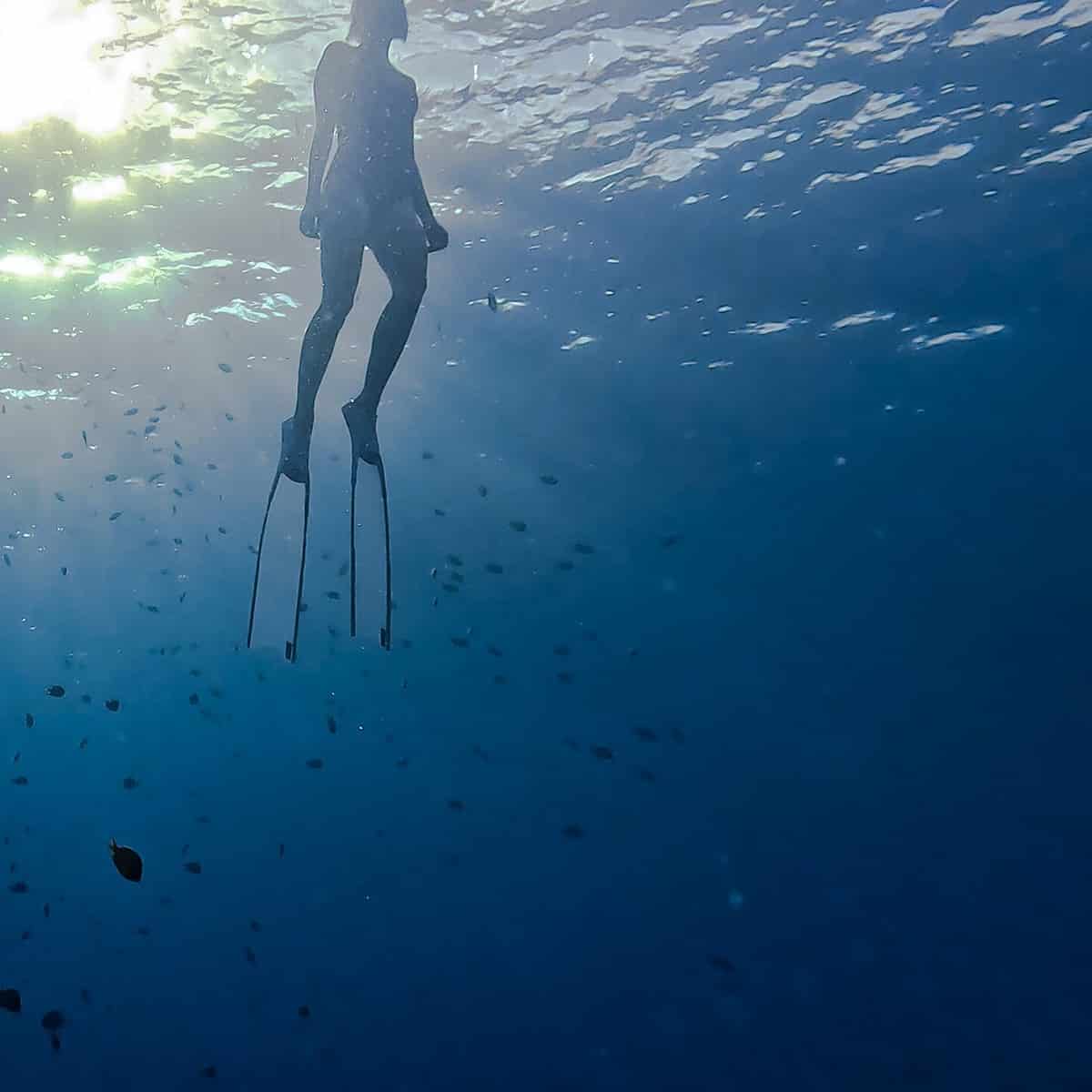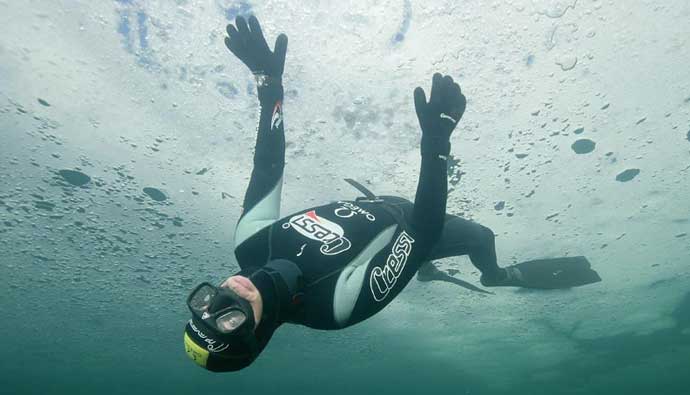
CETMA Composites manufactures elite-level carbon fiber fins for serious freediving and spearfishing. With multiple blade models and stiffness options, they offer a tailored solution for any diver. CETMA is also known for producing one of the best foot pockets on the market: the S-WING.
But in a market full of options, what truly justifies CETMA’s premium status? This guide dives deep into their exclusive technology, provides real-world proof, compares the models, and answers the critical questions you must ask before investing in high-performance fins.
Why Choose High-Performance Fins?
Understanding why freediving fins are so long and why materials matter is key.
- Length for Efficiency: Longer blades move more water with each kick. This allows for a slower, more powerful, and efficient stroke, conserving precious oxygen.
- Material for Responsiveness: The blade material dictates how it stores and releases energy. Upgrading from plastic to fiberglass or carbon fiber provides a massive leap in performance.
Material Comparison: Carbon vs. Fiberglass vs. Plastic
- Carbon Fiber (CETMA’s Specialty): The gold standard. Carbon fiber fins are incredibly lightweight and have the highest energy return, resulting in maximum hydrodynamic efficiency. The trade-off is higher cost and less impact resistance than fiberglass.
- Fiberglass: A fantastic intermediate material. Fiberglass fins are more durable and affordable than carbon and offer excellent performance far superior to plastic.
- Plastic: Best for beginners or scuba. Plastic fins are cheap and tough but heavy and unresponsive, making them unsuitable for serious freediving.
Critical Design Element: Water Rails
A critical feature that separates high-end fins from average ones is the design of the water rails. These are the soft, flexible channels that run along the edges of the fin blade.
Their function is twofold and absolutely essential for high efficiency:
- Channel Water Flow: They prevent water from “spilling” off the sides of the blade during the power stroke. By containing the water, they force it to flow down the entire length of the blade, dramatically increasing propulsion.
- Add Stability: They act like the keel on a boat, preventing the fin from wobbling or twisting during the kick. This stability ensures every bit of energy you exert is converted into forward motion.
CETMA’s water rails are a product of their meticulous design process, often featuring a variable height—taller near the foot pocket and tapering towards the tip—to perfectly match the blade’s flex pattern. This attention to detail is a hallmark of their exclusive know-how.
Proven Performance & World Records
The proof is in the performance. CETMA fins are tested in the most demanding conditions, from the cold water of Ischia to the world’s biggest freediving competitions. Athletes using CETMA edge blades have won numerous prizes and set world records, including dives exceeding -93 meters in Constant Weight (CWT) disciplines.
What Makes CETMA Different? The Technology
CETMA’s reputation is built on their meticulous engineering and proprietary technology. They don’t just assemble carbon parts; they control the entire process.
- Advanced Engineering (FEM Design): CETMA uses Finite Element Method (FEM) software for the accurate design of their blades. This allows them to create an optimized distribution of the stiffness across the whole blade, controlling the flex and bending angle precisely for peak performance.
- Flawless Manufacturing Process: They utilize a proprietary technology involving a high-temperature, high-pressure vacuum process with their carbon prepreg materials. This creates a flawless component with an extremely low void level (zero defects), ensuring the blades are strong and delamination-free.
- Durable Materials: The blades are made with a micro-toughened tetra-functional epoxy resin, making them highly resistant to damage and deformation from repeated bending.
- DRS (Dynamic Resonance System): A key CETMA innovation. The blades are engineered to work in resonance with the diver’s natural kicking frequency. This exclusive system drastically reduces fatigue and improves efficiency, making the fins feel like a natural extension of your legs.
Proven Performance & World Records
The proof is in the performance. CETMA fins aren’t just engineered in a lab; they are tested in the most demanding conditions, from the cold water of Ischia to the world’s biggest freediving competitions. Athletes using CETMA edge blades have won numerous prizes and set world records, including dives exceeding -93 meters in Constant Weight (CWT) disciplines. This level of validation by elite athletes demonstrates their reliability and efficiency at the absolute peak of the sport.
CETMA Fin Models Compared
1. CETMA EDGE
The longest of the bi-fins CETMA offers. It features a continuous, uniform flex, providing a smooth and powerful kick cycle ideal for deep dives.
- Ideal For: Dedicated freedivers, competition, deep line diving.
- Dimensions (Approx.): Length ~870 mm, Width ~200 mm.
2. CETMA MANTRA
A shorter, more versatile version of the all-carbon EDGE. The MANTRA shares a similar uniform flex but its reduced length makes it more maneuverable for spearfishing while retaining high-end performance.
- Ideal For: All-around performance, boat-based spearfishing, recreational freediving.
3. CETMA PRANA
Engineered specifically for spearfishing. The PRANA incorporates a blend of carbon fiber and fiberglass, making it more durable for rugged use (like shore diving). Its unique flex profile is snappier at the tips for quick bursts of acceleration.
- Ideal For: Dedicated spearos, shore diving, hunting in high-current areas.
Choosing Your Stiffness & Foot Pockets
Stiffness (Soft, Medium, Hard)
- Soft: Best for smaller divers (<175 lbs) or those with a high-frequency kick.
- Medium: The all-around choice for most divers (175-210 lbs).
- Hard: Only for very powerful divers (>210 lbs) or those carrying significant extra weight.
Ensuring the Perfect Footpocket Fit
A perfect footpocket fitting is non-negotiable. A loose pocket bleeds power; a tight one causes cramps.
- Pro Tip: Decide if you will wear neoprene socks and size up accordingly. A 3mm sock can easily push you to the next size. When in doubt, it’s better to go slightly larger and use a thicker sock than to have a pocket that is too tight.
CETMA Fins FAQ
CETMA offers a 2-year warranty covering manufacturing defects. It does not cover damage from impact or improper use.
You can purchase directly from CETMA or authorized dealers. Review their cancellation policy before ordering.
Colour choice is mostly aesthetic. However, bright colors (magenta, yellow, green posidonia) can improve your visibility to boat traffic and your dive buddy.
CETMA Composites are designed and manufactured in Italy. (This also applies to some Mares high-end fins).
A Note on Freediving Safety
Great gear helps, but knowledge is paramount. The No. 1 rule in freediving is simple and absolute: Never Dive Alone.
The Final Thoughts & Personal Take
Yes, I highly recommend CETMA fins. They are a premium product, and their performance, efficiency, and advanced engineering justify the cost. I personally dive soft yellow PRANA blades, and many of my boat-diving partners swear by the MANTRA. CETMA offers a clear, tangible upgrade for any serious diver.
Ultimately, CETMA offers a clear upgrade in performance over nearly any other fin on the market.