
Are you in the market for a new wetsuit? If so, you’re in luck!
Picking the best spearfishing wetsuits doesn’t have to be a challenge. In this blog post, we’ll be taking a look at seven of the best spearfishing wetsuits on the market. We’ll discuss what makes each suit special and how it can benefit you as a spearo.
So, without further ado, let’s get started!
Best Spearfishing Wetsuits for 2023 Reviewed
1. Polo Sub
Best Spearfishing Wetsuit

Polo Sub makes high-end spearfishing wetsuits. It’s not uncommon to see some of the top spearos with the Polo Sub logo branded on their chests.
If you want to purchase a perfect wetsuit, you can order a custom spearfishing suit tailored to your body. You need to provide them with your measurements and expect a new suit in a few weeks.
Custom spearfishing suits aren’t for everyone, and they can be a bit pricy. However, if you want to wear a thicker suit, like 7mm or higher, it’s better to go custom so you don’t feel constricted.
One of the best things about this Italian-made Polo Sub wetsuit is that the neoprene is a little thicker and more stretchy. The elastic nylon fiber material comes with more external protection against prolonged exposure to sunlight.
2. Epsealon

The Epsealon Tactical Stealth is Jon’s wetsuit of choice. The 5mm is super flexible and comfortable even when diving in decently cold water for long days.
Although this wetsuit isn’t the warmest on the market, it’s one of the more comfortable ones out there. You can get the 3mm or choose the 5mm wetsuit if you need extra warmth. The cuffs are also sown well, and the overall durability of the suit is mid-level.
This wetsuit offers excellent flexibility because it’s built with Yamamoto Neoprene which is super stretchy. In addition, this neoprene causes fewer allergies because it’s derived from limestone instead of petroleum which irritates the skin.
3. Beuchat
Beuchat makes great suits, especially if you’re taller. It is easily comparable to an Epsealon because its quality is roughly the same. However, the Epsealon offers more comfort.
The orange competition-style jacket of the Beuchat makes it easier for your spotter to know where you’re at when you dive. This comes in handy if you’re not using colored weights or a bright-colored snorkel. Beuchat swimsuits also have reinforcements such as a non-slip grip, elbows, and knee support.
4. SpearPro
Best Value Wetsuit

SpearPro is a newer brand that offers durable spearfishing wetsuits at a moderate cost.
This brand has been gaining a following with divers here in Southern California because of the influence Spear America has in the community. Divers here use these swimsuits for hunting spiny lobsters that crawl around rocks during winter, hit shore dives, and hunt holes in Baja.
These suits are perfect for divers looking for comfort, durability, and longevity. Overall, if you’re looking for these features, get this suit.
5. Riffe
Jay Riffe was a pioneer in the spearfishing community. Riffe is best known for their euro wood guns and travel pole spears, yet they also make outstanding spearfishing wetsuits.
What’s good about their brand is that they offer a closed-cell spearfishing suit which isn’t as common. Closed-cell suits are similar to surfing wetsuits.
Divers can blend in any ocean environment with camo wetsuits. Since they are constructed using Yamamoto 39 neoprene, they are quite durable because of the closed-cell structure.
If you don’t mind sacrificing a bit of warmth and comfort, this is a suit that will last a long time without lube.
6. Picasso
Best on a Budget
Picasso is another brand that’s been making spearfishing gear for a long time. They use Yamamoto 39 quality neoprene, black lycra on the outside, and open-cell on the inside.
They use long john trousers and have a new and improved preformed cut, giving you solid comfort at a low price. They also have a built-in hooded jacket that won’t get in the way of your low-volume freediving mask, elbow reinforcements, and ample stern support for rifle loading. They have the best wetsuits for women and men.
7. Mako
Mako has made a name for itself when it comes to getting your gear at near-factory prices. Dano works directly with manufacturers and has a great direct-to-consumer model where he passes the saving on to you.
These swimsuits are created using Yamamoto neoprene and have been certified by Tomizo Yamamoto, the president of the Yamamoto Corp, to ensure their quality.
As a 5mm and the farmer john style suit, it will help you stay warm. Avoid wearing this suit in warm water; otherwise, you’ll get fatigued from the heat. It’s advisable to use this suit in cool to cold water, especially at night when hunting for lobsters!
How to Pick a Spearfishing Wetsuit
I’d love it if there was a silver bullet that helped you pick your dream wetsuit instantly – but that would require magic. There’s no hocus-pocus here; all I can give you is as much information as possible to help you make the best decision.
If you’re like me, you’ll be overwhelmed with the options of picking a wetsuit. I grew up surfing, which gave me the impression that all wetsuits were easy to get on type with a zipper in the back.
That’s just ONE TYPE!

There’s closed-cell neoprene, open-cell hybrids, Farmer John’s, high-waisted hoods, a plethora of thicknesses, protection pads, knife holders – the list goes on and on.
Your main concern is the proper fit. From there, everything else is just a bonus.
After researching through countless forums, YouTube videos and talking with spearos in my community, I’ve compiled a list of spearfishing wetsuits that you should try.
Let’s dive in!
Spearfishing Wetsuit Features
Freediving and scuba diving wetsuits may seem complicated, but it becomes simple once you know the special terminology and the different model features.
The main features include how much protection the suit provides, the quality of the material, the comfort, and the appearance.
The main feature of a spearfishing wetsuit is the loading pad on the chest. Trust us, after a few days of diving, you’ll wish you had a comfortable pad.
Let’s dive into all of these topics to help you inform your decision.
Neoprene Types

When you choose the best spearfishing wetsuit, you’ll want one that fits properly and keeps your body temperature warm with the best flexibility for your application.
As a spearo, having an open-cell interior suit is important because it adheres to your skin with no water flow. This means it’s warmer than the same thickness of a closed-cell neoprene suit, which has a nylon-lined inside.
Let’s dive a bit more into the different types of neoprene.
Open-Cell vs. Closed-Cell Neoprene
Open-cell neoprene refers to the fact that the interior of the two-piece wetsuit is not lined with Lycra or Nylon like your typical scuba suit.
Even though a suit is called an open cell, it does not reflect the type of neoprene used. However, neoprene for manufacturing wetsuits varies greatly in quality.
In closed-cell neoprene, the microcells are sealed from each other; if the walls of one break, air or water will not pass through the cells adjacent to it, and the material remains impermeable.
If you choose the best spearfishing wetsuits, most won’t have a lining (Nylon or Lycra) attached to the interior surfaces. What we’ve come to know as open-cell neoprene suits have a lining (Nylon or Lycra) attached to the exterior surface and raw smooth neoprene as the interior.
This raw smooth neoprene interior is a product of the cutting process that reduces the neoprene to the required thickness; 3mm, 5mm, etc. The exterior neoprene surface under the Lycra lining is the same as the interior.
Lycra Suits
Use a lycra suit when you’re diving in the warm water and want added protection from the sun or little critters that might be drifting in the current. Make sure you get one with a loading pad; otherwise, you’re going to be left with bruises from loading your gun.
Thermals
Thermals provide extra warmth while you’re in the water. They tend to have a fleece liner or a titanium lining. If the thickness isn’t an issue, go with the fleece liner, but if you need something thinner but still warm, pay the premium and go for the titanium.
Spearfishing Wetsuit Thickness Guide

Wetsuit thickness is one of the most important features because it dictates how warm the suit will be for the diver.
Wetsuits come in various thicknesses, from as thin as 1 millimeter to 7 millimeters. The most common sizes are 1.5mm, 2mm, thickness 3mm, 5mm, 7mm, and open-cell.
If you live where the water fluctuates temperature drastically, it’s best to have a few different suits with different thicknesses. But wetsuits can be expensive, so if you can’t buy more than one, pick one in the middle and dress up or down, depending on the conditions.
Here are some basic rules of thumb for wetsuits:
- 1mm-2mm: Use in warmer water. These will also provide protection from the wind and the sun.
- Thickness 3 mm-5 mm: Use in cooler water. A thickness of 3mm will also help keep you in the water longer, even if the water doesn’t feel super cold. Being in the water cooler than your blood’s temperature will make your body expend energy to keep the body warm – this means less spearo time.
- 7mm thicker wetsuit for spearfishing: Use this for really cold water. The thickness will likely make the suit less comfortable and feel more restrictive, but it’s worth not getting hypothermia.
Listen to more spearfishing tips on the Cast & Spear Podcast
Spearfishing Wetsuit Color Guide
When it comes to spearfishing wetsuit colors, it’s all about choice. There’s not much research stating that specific color or pattern makes you invisible to fish, so until that happens, pick whichever one you like.
Many suits are now camouflage wetsuit-inspired that look sweet for camouflage spearfishing!
Some spearos recommend that if you are diving in blue water, you should get a blue wetsuit for spearfishing. If you’re spending more of your time near rocks, then go for a brown suit and if you’re by a reef, get a green one.
If you have the money, get one of each and test it out.
Best Spearfishing Wetsuit Brands?

Custom Spearfishing Wetsuit Brands
The efficiency of a wetsuit is mostly determined by the perfect adhesion of neoprene to your body’s shape. That’s why Polosub firmly believes in made-to-measure wetsuits.
This brand started in 1994 in Rome and focuses on freedivers and spearfishers.
Try suits from this brand if you need a wetsuit for your unique body size, solid knee pads, and shape.
Elios
Elios Sub has been making tailored diving suits since 1977. They are based in Italy but ship all across the globe. They pride themselves on being one of the most innovative pieces wetsuit companies.
If you’ve got the money and do not want an off-the-shelf wetsuit, spend it here.
Oceaner
These guys are based in British Columbia and have put their suits through the test on the Canadian West Coast.
Their suits are built with strength and style in mind. They can hold up under extreme conditions, and be that they are used up in Canada, then they must be pretty warm!
Other Spearfishing Wetsuit Brands
Yazbeck
Yazbeck is known for its uncompromising adherence to quality wetsuits. Roger Yazbeck has been breaking the mold for decades. His love for conservation and making products that don’t harm the environment is another big reason to buy from them.
Omer
Omer is based in Italy, and those in the know will tell you that their products are great. I was recently at a spearfishing auction, and some of the highest bidding products were OMER spearfishing wetsuits – maybe that means something!
Rob Allen
Rob Allen has made a name for themselves with their spearguns, and now they are doing it with their wetsuits.
Many spearos talk about them. Their suits have a solid size chest pad too, which is important, especially when you’re loading the big guns during your bluewater sessions.
Salvimar
Another great company that makes comfortable spearfishing wetsuits. Their name was dropped many times by the spearos in Spearboard.
Read also: 5 Best Drysuits for Scuba Diving
How to Take Care of Your Spearfishing Wetsuit
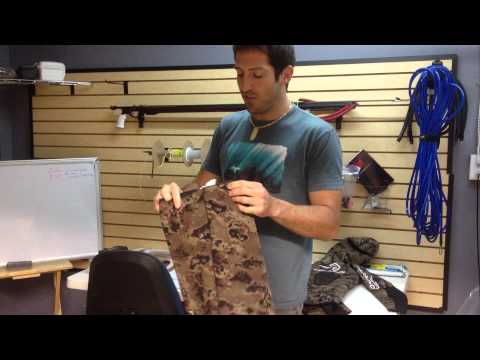
Taking care of your spearfishing wetsuit is important for the longevity of the suit. It’s better to take care of them quickly after each outing rather than waiting for a big issue to arise, making you need to get a new suit.
How to Put On Your Spearfishing Wetsuit
If you are using a close-cell style suit, putting on the spearfishing wetsuit is straightforward, just throw it on. If it’s tight for any reason or hard to get on, try putting your hands and feet in a plastic bag to reduce some of the friction.
For open-cell neoprene two-piece suits, it’s a little trickier. You’ll need to use lubrication. My favorite choice is liquid baby soap. Just put a few tablespoons in a shakable water bottle, add some water and shake it until there are foam suds. Then put the soapy water mixture inside the suit and make sure it’s fully lined with the suds.
Put your arms and legs through, and watch it slide right on.
How to Take Off Your Spearfishing Wetsuit
Taking off a one-piece suit is as simple as unzipping and pulling out your arms and legs. I recommend standing on a spearfishing wetsuit mat so that you don’t get any tar or debris from the parking lot on your suit.
Taking off a two-piece suit is a little trickier. Unclasp the buckles near the crotch, then pull the bottom of the jacket top over your head and pull out your head and arms. Take off the bottoms like normal pants.
How to Wash Your Spearfishing Wetsuit

Washing your wetsuit doesn’t have to be complicated. I recommend after taking it off that you rinse it well with fresh water and let it dry in a warm place outside of direct sunlight.
If you need to use soap to get off tar or other grime, make sure you use one that’s not going to damage your neoprene.
How to Remove Smells from Your Spearfishing Wetsuits
Sometimes if you aren’t diligent about cleaning your wetsuit after each dive, your suit will begin to develop an odor. This is more common in closed-cell suits due to the extra nylon material.
Just pick up a good wetsuit shampoo, and after a few treatments, your suit should smell good again.
Spearfishing Wetsuit Buyer’s Checklist
- Determine the average and high/low of the water you’ll be diving in.
- Pick the thickness you’re searching for.
- Determine if you want a tailor-made suit or an off-the-shelf one.
- Do you want open-cell neoprene or closed-cell?
- Farmer John style or high-waisted?
- Browse the different brands.
- Measure your various body parts to help you navigate size charts.
- Pick the color and pattern for your conditions. When in doubt, just go black.
- Get a wetsuit shampoo for the occasional cleanings.
- Keep your suit out of the sun when not in use.
- Don’t store it on a hanger, as it might overstretch the shoulder area.
 Founder & Angler


 Facebook
 YouTube