How to Tie the Bimini Twist Knot: A Comprehensive Guide

Photo of author
Last Updated:

The Bimini Twist knot, often called the Bimini Twist fishing knot, is a cornerstone knot for serious anglers, especially in offshore fishing and big game fishing scenarios. Why tie a Bimini Twist? What is the point of a Bimini Twist? Its primary purpose is to create an exceptionally strong loop—a double line section—at the end of a fishing line. This double-line leader maintains nearly 100% of the original line strength, provides superior shock absorption, and offers a robust connection point for leaders or terminal tackle. This guide will detail how to tie this essential knot, its uses, and why it’s revered.


Overview: The Unmatched Strength of the Bimini Twist

Why use a Bimini Twist knot? When to use a Bimini Twist knot? You use a Bimini Twist when maximum strength and reliability are paramount. The knot’s unique coiled structure, formed by numerous twists, distributes stress evenly, making the loop end often stronger than the unknotted single strand of line. This makes it indispensable for creating a double line before connecting to a heavier leader (using leader connections like a Yucatan or Bristol knot) or attaching terminal tackle like a snap swivel. What is the strength of the Bimini Twist knot? How strong is a Bimini Twist knot? It’s renowned for retaining close to 100% of the line’s breaking strength, a feat few other knots achieve.


Knot Tying Instructions: Step-by-Step Bimini Twist

Learning how to tie a Bimini Twist takes practice, but the payoff in line strength and reliability is immense. This knot often requires an anchor point for tension.

bimini twist
  1. Measure & Initial Loop: Determine your desired loop length. Pull out at least twice that length of line, plus a very long tag end (critical!). Form a loop around a support—your knees (common method for many anglers), a reel handle, boat cleat, or even your index finger for smaller loops. The support maintains tension on the initial loop.
  2. Initial Twists (The Column): With the standing line taut, wrap the tag end around both strands (or legs) of the loop. How many twists are in a Bimini Twist? How many turns on a Bimini Twist? For monofilament or fluorocarbon, 20-25 twists are standard. For braid, many anglers use more, typically 30-40, or even up to 60 for very thin braids, to ensure sufficient friction. These first twists should form a neat, tight column of twists moving away from your support.
  3. “Setting” the Twists & Forming the “V”: While maintaining tension, carefully allow the column of twists to slide down and compact against each other. Gently pull the main line and loop end apart to further tighten these wraps. Now, maintaining the open loop end (often spread with fingers or kept around the support), allow the tag end to hang down, forming a “V” with the loop. The initial twists should look like a tightly coiled spring.
  4. Locking Wraps (Rolling the Tag End): This is where the tag end roll happens. Bring the tag end over the near side of the loop (one leg of the loop). Then, pass it under that same leg and then over the other leg of the main loop (the far side). Continue wrapping the tag end back over the initial column of twists, working towards your support. These wraps should lay neatly side-by-side, not overlapping. Make 4-6 firm, even locking wraps. As you make these wraps, the angle of the loop will change slightly as the knot begins to form.
  5. Finishing Hitch (Securing the Knot): To lock the wraps and prevent unraveling, finish with one or two half hitch knots (or a two-turn half hitch) made with the tag end around both legs of the loop, just above the locking wraps you just completed. Some anglers prefer an overhand knot here for added security.
  6. Tighten & Trim: Pull firmly and smoothly on the tag end, the loop, and the standing line simultaneously to fully seat the knot. The wraps should “flow” and bind tightly. Trim the tag end closely. A properly tied Bimini Twist knot will look neat, compact, and incredibly strong.

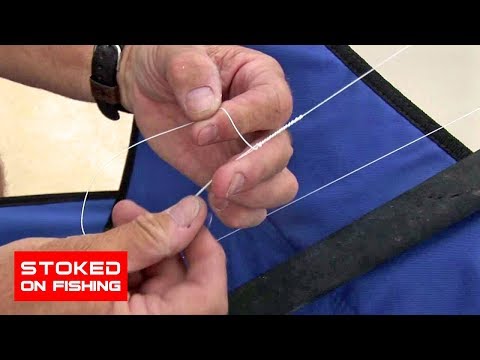
    How to tie a Bimini Twist
    This is a strong knot that needs an anchor point to tie. This Bimini is only for show.
    YouTube video


    Uses: The Versatile Application of the Knot

    • The double line created by the Bimini Twist fishing knot is invaluable:
    • Leader Connections: The strong loop is perfect for loop-to-loop leader connections with a shock leader.
    • Terminal Tackle: Attach a snap swivel or barrel swivel to the loop end, often using a Cat’s Paw knot. This is critical for offshore fishing rigs.
    • Abrasion Resistance: The double line significantly increases resistance to chafing from big fish, rough mouths, or structure.
    • Knot Foundation: The double line serves as the base for other complex leader connections like the GT Knot or Yucatan Knot when joining braid to monofilament or fluorocarbon.
    • Fly Fishing: Creates a reliable loop on backing for a loop-to-loop connection to the fly line.
    • Live Bait & Lures: Provides a robust connection that can withstand aggressive strikes and the stress of casting heavier lures or baits. The smooth transition helps prevent snags on rod guides.

    Tips for Tying a Perfect Bimini Twist

    • Tension is Key: Maintain constant, even tension on all parts of the line throughout the tying process. This is the secret to a tight, strong knot.
    • Moisten (Mono/Fluoro): For monofilament and fluorocarbon, moistening the line reduces friction, allowing wraps to seat tightly without damage.
    • Long Tag End: Always start with a very long tag end. Running out of line is a common frustration.
    • Practice: This is not a knot learned in one try. Practice repeatedly with scrap line. How to tie an easy Bimini Twist? There’s no “easy” shortcut to a proper Bimini; ease comes with practice.
    • Consistency in Wraps: Ensure all twists and wraps are neat, tight, and lie correctly against each other.

    Advantages of the Bimini Twist

    • Unmatched Line Strength: Maintains nearly 100% of the line’s original breaking strength.
    • Superior Shock Absorption: The coiled structure provides inherent stretch, crucial for battling big fish and absorbing sudden shocks.
    • Versatility: Excellent for monofilament, fluorocarbon, and braided lines. Can you tie a Bimini Twist in braid? How to tie a Bimini Twist with braid? Yes, though often with more initial twists (e.g., 30-60) for thinner braids to ensure adequate friction.
    • Reliability: Considered far more reliable than simpler double-line knots like the Spider Hitch for demanding applications.

    Disadvantages of the Bimini Twist

    • Complexity: What is the toughest knot to tie? The Bimini is often cited as one of the more challenging fishing knots to master.
    • Time-Consuming: Can be slower to tie than simpler knots, especially under pressure.
    • Requires Support/Tension: Effective tying often needs an anchor point (like your knees) or adept hand coordination to maintain tension.

    Alternatives to the Bimini Twist

    • While the Bimini is king for a 100% double-line loop, other knots offer simpler loop creation for different needs:
    • What knot is similar to Bimini Twist? The Spider Hitch creates a double line, but is generally considered less strong and less reliable than a Bimini for big game fishing.
    • Perfection Loop / Surgeon’s Loop: Good for creating a simple fixed loop at the end of a fishing line for loop-to-loop leader connections. How to tie a simple loop knot? These are good options.
    • King Sling (Non-Slip Mono Loop / Kreh Loop): Creates a non-slip loop allowing lures or hooks free movement. Not a double-line knot.

    Strongest Knots for Swivels & Terminal Tackle

    What is the strongest knot to swivel? What is the best knot for spinning?

    • Palomar Knot: Very strong, easy to tie, excellent for attaching line to swivels, hooks, or lures. Many consider it the most secure knot for fishing line for terminal connections.
    • Uni Knot (Hangman’s Knot): Versatile and strong for terminal connections.
    • Improved Clinch Knot: A classic, reliable choice.
    • Cat’s Paw to Bimini Loop: Specifically for attaching a swivel to the double line loop of a Bimini Twist. How many times do I wrap the bimini loop when tying a cat’s paw in it to attach to a swivel? Typically 3-5 wraps through the swivel eye and around the loop legs.

    Frequently Asked Questions

    How to tie a Bimini Twist with mono?

    Follow the standard instructions, ensuring 20-25 initial twists and moistening the line.

    How to tie a Bimini Twist to leader?

    Use the Bimini’s double-line loop to connect to the leader via:
    Loop-to-Loop (if leader has a loop).
    Yucatan Knot or Bristol Knot (double line to single leader strand).
    Modified Albright or an FG Knot (though the FG is typically braid to leader, it can be adapted).

    What is the difference between FG knot and Bimini Twist?

    The Bimini creates a double-line loop at the end of your main line. The FG knot is a connection knot that joins a main line (usually braid) directly to a leader (usually fluorocarbon or monofilament), creating a very slim profile ideal for passing through rod guides. They serve different primary purposes but can be used in sequence (e.g., main line -> Bimini -> FG to leader, though less common than Bimini -> Yucatan to leader).